Embracing Change: Preparing Our Children for an AI-Driven Future
In a world where artificial intelligence is rapidly transforming industries and reshaping careers, many of us as parents and educators find ourselves wondering: How do we best prepare our children for a future that looks increasingly different from our present? It's a question that touches on both our hopes and our concerns for the next generation. I have been thinking about this a lot lately.
The good news is that while technology changes quickly, the fundamental skills that make us human remain timeless. By understanding how education is evolving and focusing on developing key abilities, we can help our children not just survive but thrive in an AI-driven world.
The Future is Closer Than We Think
We are raising children for a world that's changing faster than any other time in history. Artificial Intelligence is reshaping industries, automating tasks, and redefining what it means to "work." But while technology is evolving rapidly, our education systems are largely standing still—still training students for long, linear careers in fields that may not exist when they graduate.
The Myth of One Career for Life
The idea that our children will choose one career and stick with it is outdated. The World Economic Forum predicts that today's children will have multiple careers—many of which haven't even been invented yet. Yet our schooling often assumes a fixed trajectory, favouring rote learning and testing over adaptability and critical thinking.
The Education Gap and the Promise of Personalisation
Traditional education has served us well for generations, but it was designed for a different era—one where careers were more stable and information less abundant. Today's classroom model, with one teacher managing 20-30 students, often struggles to meet each child's unique learning needs, especially when there are increasing complexities in the classroom setting for teachers to navigate such as disabilities, trauma, English as a second language, neglect, and poverty to name a few.
Research from educational psychologist Benjamin Bloom (1984) highlights this challenge through what's known as the "2 sigma problem." Bloom found that students who received one-to-one tutoring performed two standard deviations better than those in conventional classrooms. In practical terms, this means the average tutored student outperformed 98% of students in traditional classes.
Recent studies continue to validate Bloom's findings. A meta-analysis published in December 2023 focusing on small-group learning in engineering and technology education found positive outcomes that support aspects of Bloom's research. Additionally, Leonard English (May 2025) published research applying these findings to language learning, confirming that one-on-one tutoring leads to significantly better outcomes than traditional teaching methods.
This remarkable finding points to the power of personalised learning—something that has historically been available only to a privileged few. But here's where AI offers an exciting possibility: Could technology help bridge this gap by providing more personalised learning experiences at scale? I pose the question not from a space of confidently knowing this, but from a space of curiosity and wanting to see better outcomes for kids.
How AI is Already Changing Our World
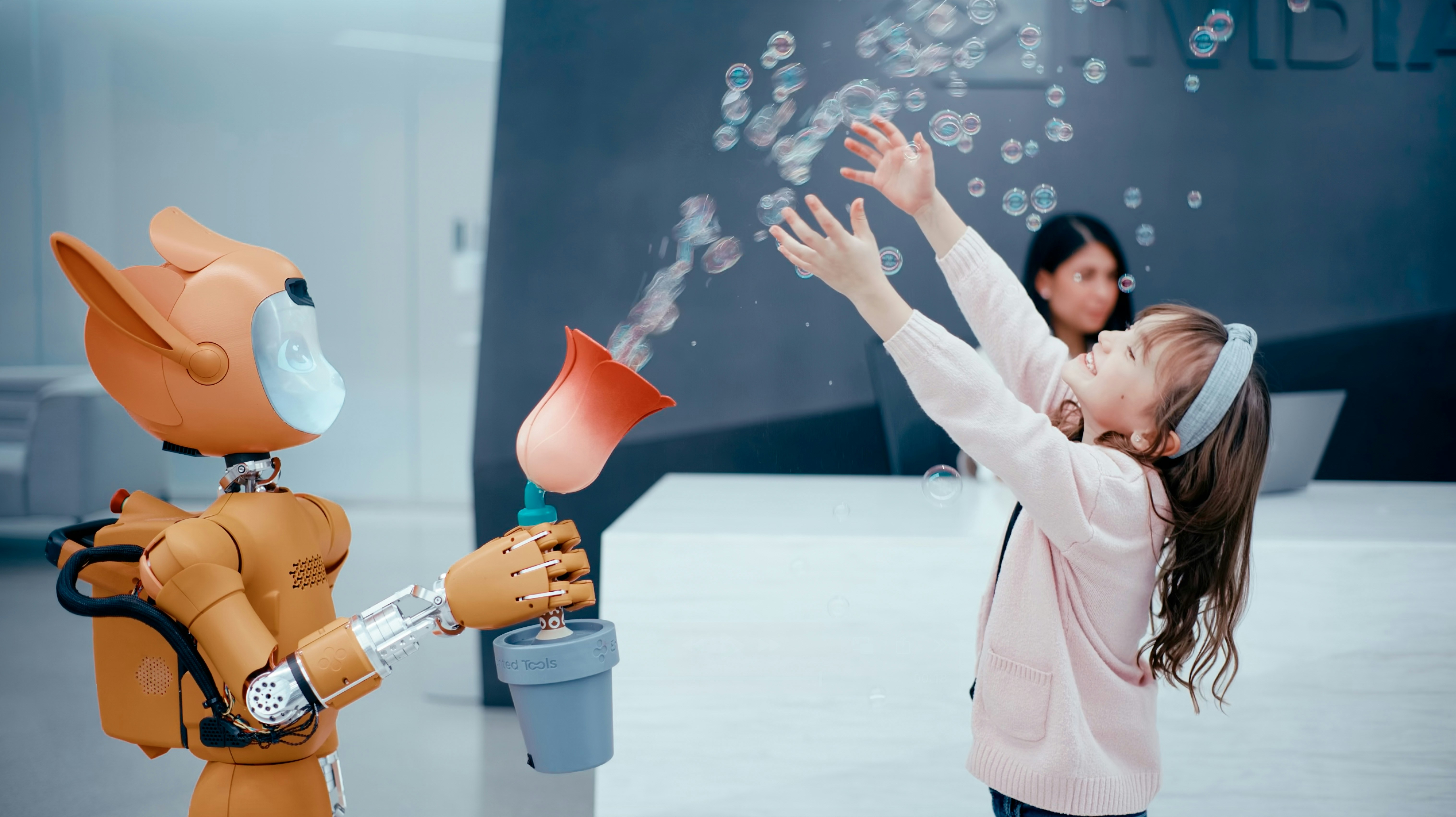
To understand why adaptability matters so much for our children, let's look at how AI is already transforming industries. For example, in residential aged care, social robots are being used to reduce loneliness and support residents with individualised exercise programs. These friendly robots can lead singalongs, guide gentle movements, and provide companionship, demonstrating how AI can work alongside humans to improve quality of life. These aren't distant future scenarios—they're happening now, and they illustrate an important truth: many roles we're currently preparing children for may look dramatically different or even disappear within their lifetimes.
This isn't cause for alarm, but rather a gentle reminder that our educational approach needs to evolve. Rather than training children for specific jobs that may not exist when they enter the workforce, we need to equip them with adaptable skills that will serve them regardless of how technology evolves.
Essential Skills for an AI-Driven Future
I believe the most valuable abilities in an AI-driven world will be those that complement technology rather than compete with it. According to multiple studies conducted between 2023-2025, here are the skills our children will need:
Adaptability and resilience: Perhaps the most important skill is becoming comfortable with change itself. Children who learn to pivot quickly, re-skill, and view challenges as opportunities will thrive in a rapidly evolving landscape.
Critical thinking and problem-solving: The ability to analyse information, question assumptions, and develop innovative solutions will always be in demand. AI can process data, but humans excel at asking the right questions and applying judgement.
Creativity and innovation: Original thinking and innovation go beyond what AI can generate. Creative expression helps children develop unique perspectives that no algorithm can replicate.
Collaboration and emotional intelligence: Empathy, self-awareness, and interpersonal skills remain uniquely human strengths. As AI handles more technical tasks, these "soft skills" become increasingly valuable.
Digital literacy and AI awareness: Understanding technology fundamentals while maintaining a healthy relationship with digital tools helps children become informed users rather than passive consumers.
Self-directed learning: The ability to learn, unlearn, and re-learn will serve children throughout their lives, especially as career paths become less linear.
Creators, Not Just Consumers
One of the most concerning trends in our digital world is how easily technology can turn us into passive consumers rather than active creators. Social media platforms, games, and entertainment apps are designed to capture attention and encourage consumption rather than creation. I am sure we have all found ourselves scrolling and consuming digital content and maybe sending lots of cat, dog, goat and miniature cow videos to our adult children… and been shocked that you had been consuming content for an hour or more.
Recent research (March 2025) indicates that children who engage with technology primarily as creators rather than consumers develop stronger problem-solving skills and greater agency in their learning. When children learn to build, code, design, or otherwise create with technology, they develop a fundamentally different relationship with it—one of empowerment rather than dependency.
As parents and educators, we have a crucial role in guiding this relationship. Rather than simply limiting screen time (though boundaries remain important), we can redirect children's technological engagement toward creative pursuits:
From watching videos to making them: Help children learn to script, film, and edit their own content rather than just consuming others'.
From playing games to designing them: Introduce children to age-appropriate coding platforms where they can create their own interactive experiences.
From using AI tools to understanding and building them: Explore how AI works and experiment with simple AI projects that children can modify and expand.
This creator mindset extends beyond digital skills—it's about fostering an approach to life where children see themselves as active participants in shaping their world rather than passive recipients of whatever comes their way.
Teaching Our Children to Embrace (Not Fear) Change
The saying used to be there is nothing more certain in life than death and taxes. I think we now need to add 'change' to this phrase. Change is no longer something that happens to us—it's a constant we must navigate with intention. This starts at home and in our learning environments. Based on research compiled throughout 2024-2025, here are some practical approaches:
Encourage curiosity and questioning: Create an environment where children feel comfortable asking "why" and exploring different perspectives. When they ask questions, resist the urge to provide immediate answers—instead, guide them toward discovering solutions themselves.
Talk about change as a normal part of life: Help children understand that change is constant and natural, not something to be feared.
Model lifelong learning: Demonstrate your own curiosity and willingness to learn new skills. Let children see you embracing challenges and adapting to change.
Promote project-based learning: Engage children in real-world projects that require critical thinking, creativity, and collaboration. These experiences help them see connections between subjects and develop problem-solving skills.
Normalise failure and resilience: Create safe spaces for children to take risks, make mistakes, and learn from them. Share your own experiences with setbacks and how you overcame them.
Explore AI tools together as creators: Introduce age-appropriate AI tools not just to use them, but to understand and potentially modify them. Discuss how these tools are built and how they might be improved or adapted for different purposes.
Balance consumption with creation: For every hour spent consuming content, encourage an hour of creating something—whether digital or physical. This balanced approach helps children develop active rather than passive relationships with technology.
Consider AI-enhanced learning: Explore educational tools that use AI to provide customised learning experiences. These can help identify your child's strengths and areas for growth while providing tailored support.
A Call to Educators and Parents
As parents, educators, and caregivers, we must move beyond preparing kids for a job, and start preparing them for change. If we teach them how to learn, unlearn, and re-learn, we'll give them the tools they need to thrive in a world shaped by AI—not just survive it.
The Human Advantage
As we navigate this changing landscape, it's worth remembering that the goal isn't to compete with AI but to develop the uniquely human qualities that complement it. The most successful people in an AI-driven world won't be those who can perform calculations faster than a computer, but those who can think creatively, connect deeply with others, and adapt readily to change.
It's worth noting that some countries, including Sweden and parts of the United States, are reintroducing pen and paper in classrooms after years of digital first approaches. Research shows that handwriting supports cognitive development, memory retention, and fine motor skills in a way that typing cannot replicate. This isn't a rejection of technology it's a recognition that foundational skills matter, and that the best approached is balanced, not binary.
I strongly align with a Steiner and Montessori philosophy of education and know that children need the great outdoors to be healthy so please don't take this blog post as one in which I am advising that kids should sit in front of screens and access AI willy-nilly. What I am encouraging is that we don't stick our heads in the sand and pretend that AI is not an issue and can be ignored. It's not going away, so we should prepare our children and grandchildren to navigate it.
AI is, and will be a significant disruptor to how we work and live. So let's focus on the timeless human strengths we possess while embracing the possibilities of new technologies, so we can help our children develop the confidence and skills they need to thrive—not just in the world as it is today, but in the world as it will become tomorrow.
Recommended Resources
As an Amazon Associate I earn a small commission from qualifying purchases. This helps me to continue to create resources and content.
If you're looking to explore these ideas further, here are some wonderful resources that have informed my thinking and might support you on this journey:
For Parents:
Mindset: The New Psychology of Success by Carol S. Dweck A classic that explores how a growth mindset helps children embrace challenges and develop resilience—essential skills for navigating an ever-changing world.
Raising Humans in a Digital World by Diana Graber A practical guide for parents navigating technology with children, offering strategies for fostering healthy digital habits and raising creators, not just consumers.
The Whole-Brain Child by Daniel J. Siegel and Tina Payne Bryson An evidence-based approach to understanding child development that helps parents nurture adaptability, emotional intelligence, and resilience.
For Educators:
The Innovators: How a Group of Hackers, Geniuses, and Geeks Created the Digital Revolution by Walter Isaacson Inspiring stories of creators and innovators that can help educators foster a maker mindset in their students.
For Kids:
Hello Ruby: Adventures in Coding by Linda Liukas A beautiful, story-based introduction to computational thinking for younger children (ages 5-9) that makes coding accessible and fun.
Beautiful Oops! by Barney Saltzberg A delightful book for younger children (ages 3-7) that teaches them to see mistakes as opportunities for creativity and innovation.
The future may be unpredictable, but with the right preparation, it's also full of promise and that's something worth embracing together.
Love,
Chelle 💗
Special Education Complex Supports and Family Support Specialist
